
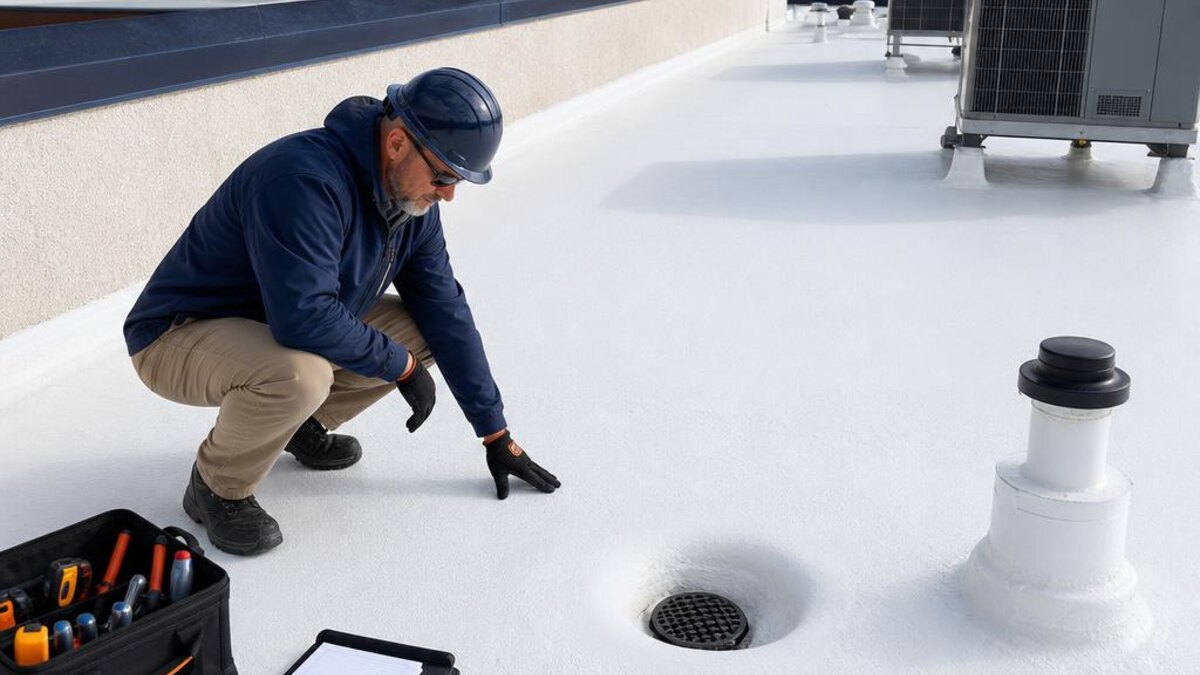
Inspection is a record-building process, not a quick roof walk
An SPF roof inspection should answer four questions: what changed, where it changed, whether water or damage may have reached the system, and what level of review is appropriate next. A single photograph or a note that the roof “looks fine” cannot establish those answers.
Begin with the installation records, repair history, product information, warranty terms, previous photographs, leak reports, and rooftop-equipment changes. Then compare current observations with that baseline. For the larger decision about whether an existing commercial roof should be repaired, restored, recovered, or replaced, use Score’s commercial roof restoration decision guide.
Key takeaways for owners and facility teams
- No one schedule fits every roof. Inspection timing depends on system documents, warranty requirements, exposure, roof traffic, prior findings, and building risk.
- Events matter. Severe weather, leaks, rooftop construction, equipment replacement, and accidental impact can justify review outside a routine schedule.
- The coating protects the foam. Changes in coating condition deserve attention before exposed or damaged foam is left vulnerable.
- Details often control performance. Drains, edges, penetrations, curbs, flashings, transitions, and repairs need the same attention as the field of the roof.
- Records make observations useful. Dated photos, marked roof plans, service reports, and repair documents reveal whether a condition is new, stable, or expanding.
- Owner observations have limits. Suspected moisture, unsafe access, structural movement, electrical hazards, active storm conditions, and uncertain damage call for qualified professionals.
Understand what an SPF roof inspection covers
An exterior spray polyurethane foam roof is a system, not exposed foam by itself. The foam creates an insulating, continuous roofing layer, while a compatible protective coating shields it from ultraviolet exposure and weather. Flashings, reinforcement, sealants, drainage components, and transitions complete the assembly.
That system context matters during inspection. A surface mark may be cosmetic, or it may signal coating loss, impact, movement, or moisture entry. A stain indoors may originate at a penetration, wall, mechanical unit, plumbing line, or another location rather than directly above the symptom. Learn more about complete spray foam roofing systems before treating one visible condition as the whole diagnosis.
When an inspection or additional review may be appropriate
Use the roof-specific warranty and maintenance documents as the primary scheduling reference. Beyond those requirements, the following triggers can justify observation or professional review:
- Severe wind, hail, windborne debris, prolonged rainfall, snow or ice events, or another event that may have affected the roof.
- A new leak report, ceiling stain, unusual odor, damp material, or unexplained interior moisture.
- Installation, removal, or service of HVAC equipment, solar components, piping, conduits, antennas, drains, curbs, or supports.
- Unplanned roof traffic, dropped tools, sharp debris, displaced walkway pads, or evidence that rooftop trades crossed unprotected areas.
- Changes in ponding, drainage time, debris accumulation, coating appearance, sealant, flashings, penetrations, or previous repairs.
- A property transaction, capital-planning cycle, warranty milestone, or change in facility personnel that makes a documented baseline useful.
Safe observations an owner can document
Facility personnel can often improve the maintenance record without diagnosing or repairing the roof. Observe only from locations that are authorized and safe under the building’s fall-protection, access, weather, and operational rules. Do not enter a questionable area, walk on visibly unstable materials, disturb suspect substances, or approach electrical and mechanical hazards.
Start inside the building
- Record the date, time, weather, and exact location of water or staining.
- Note whether the symptom followed wind-driven rain, prolonged rain, snow, thawing, or rooftop service.
- Photograph the affected area and mark it on a floor plan when practical.
- Check whether plumbing, HVAC, condensation, walls, windows, or other non-roof sources need separate evaluation.
Observe the roof without attempting repairs
- Look for debris, blocked drainage paths, displaced components, unusual ponding, and changes around drains and scuppers.
- Document coating discoloration, erosion, cracks, splits, punctures, blisters, exposed foam, open seams at details, or damage near traffic paths.
- Review penetrations, curbs, parapets, edges, flashings, transitions, equipment supports, and previous repair areas.
- Note unprotected cables, loose materials, sharp objects, chemical discharge, grease, or other conditions that may affect the roof surface.
- Take overview and close-up photographs with a location reference; avoid probing, cutting, scraping, sealing, or coating the condition.
An SPF roof inspection checklist
This checklist organizes observations; it does not replace the system manufacturer’s requirements, warranty inspection, moisture investigation, code review, or a qualified roofing assessment.
| Area | What to document | Why it matters |
|---|---|---|
| Roof access and traffic | Access points, walkways, traffic routes, dropped objects, and unauthorized work | Concentrated traffic and sharp objects can damage the protective surface. |
| Field coating | Color or texture changes, erosion, cracks, pinholes, punctures, blisters, and exposed foam | The coating is the foam’s weathering and ultraviolet protection. |
| Drainage | Drains, scuppers, gutters, overflow paths, debris, low areas, and changed ponding patterns | Blocked or altered drainage can concentrate water at weak details. |
| Penetrations and curbs | Openings, sealant changes, movement, repairs, equipment discharge, and new attachments | Interfaces can move independently and are common service locations. |
| Edges and transitions | Parapets, walls, terminations, expansion joints, flashings, and adjoining roof systems | Movement and geometry make continuity at transitions especially important. |
| Previous repairs | Location, material, date, visible change, and whether the original symptom returned | Repair history helps distinguish an isolated condition from a recurring pattern. |
| Interior evidence | Leak location, staining, dampness, weather, timing, and affected operations | Interior symptoms help direct investigation but do not locate the entry point by themselves. |
| Records | Dated photos, marked plans, reports, invoices, product data, warranty contacts, and trade access logs | A consistent record supports trend review and scope decisions. |
Coordinate every rooftop trade
Many roof problems begin after the original roofing work. Mechanical, electrical, communications, plumbing, solar, and other trades may move pads, set tools on the coating, drag equipment, add penetrations, discharge contaminants, or leave debris. A roof-access procedure should identify approved routes, protection requirements, prohibited actions, reporting responsibilities, and who reviews the area after work.
Before a new curb, support, pipe, conduit, or penetration is added, define who is responsible for integrating it with the roof system and preserving applicable warranty conditions. After work, document the route and work area even if no damage is immediately obvious.
When professional review should replace owner observation
Request qualified review when there is exposed foam, a puncture, blistering, splitting, recurring leakage, uncertain coating loss, movement at details, widespread surface change, suspected wet materials, deck concerns, or damage after severe weather. The evaluator may need system records, close inspection, moisture methods, test openings, adhesion evaluation, or manufacturer input. No single tool or visual clue establishes the full condition.
Use the related guide to understand signs that may call for localized repair or a broader recoating evaluation. If the roof has a leak, impact, puncture, blister, or storm-related condition, document it and review the SPF roof damage triage steps rather than attempting an improvised repair.
Build a roof record that survives staff changes
Keep the roof plan, system description, installer and manufacturer contacts, warranty, product documents, inspection reports, moisture findings, repair scopes, photographs, invoices, and rooftop access log in one controlled location. Use consistent roof-zone names and photograph locations from repeatable viewpoints.
The goal is not paperwork for its own sake. A clear record helps the next owner, facility manager, consultant, or contractor understand what changed and why—before a small uncertainty becomes an emergency decision.