
Separate three different timelines
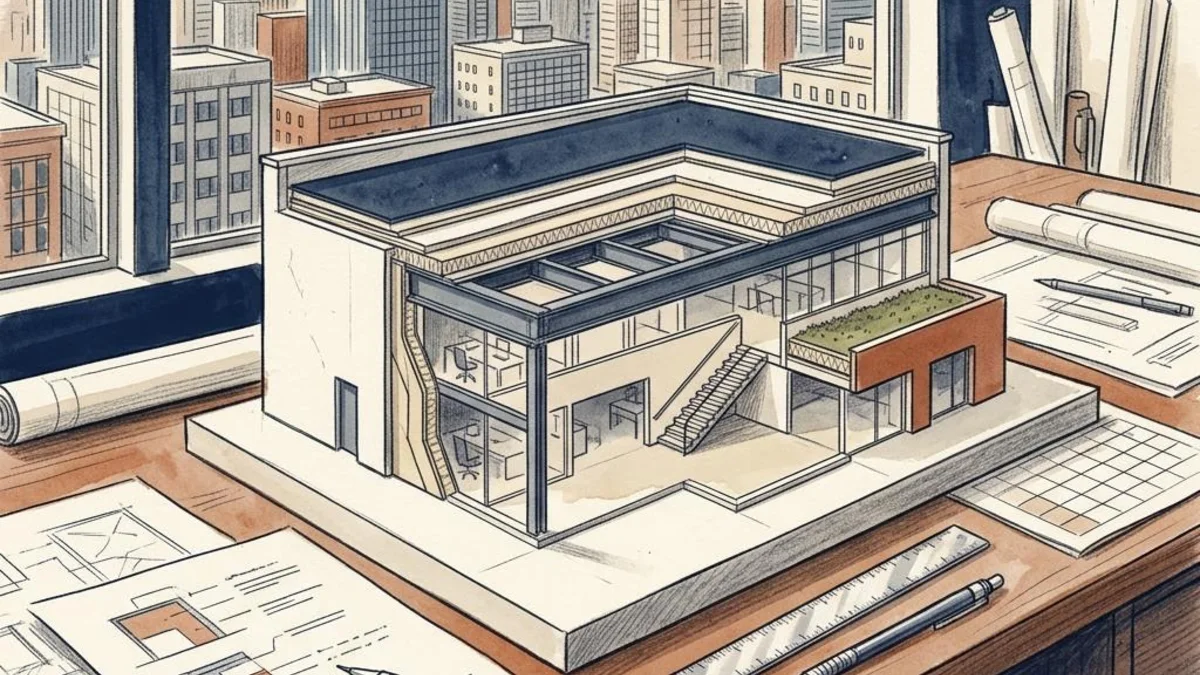
An exterior SPF roof combines roofing-grade polyurethane foam with a compatible protective covering and integrated details. The foam provides insulation and forms part of the roof assembly; the covering protects it against exposure and wear. Neither should be evaluated independently of the deck, retained materials, flashings, and drainage beneath and around it.
| Timeline | What it means | What it does not establish |
|---|---|---|
| Roof-system service life | The period the assembly can continue performing with appropriate work | A guaranteed replacement date for every building |
| Protective-coating renewal | Condition-led restoration of the exposed protective layer | Automatic replacement of all underlying foam |
| Warranty term | The duration of specified contractual coverage | The roof’s physical life or coverage of every failure |
How to interpret long-life claims
What the field evidence actually measured
We reviewed the NRF field study, rather than treating a general lifespan claim as a forecast. Researchers inspected 140 roofs between December 1995 and March 1997, including New York and New Jersey sites. Eleven roofs had at least 20 years of service; the reported median age was 10.5 years and the maximum was 27. Installation dates were unknown for 15 roofs.
| Evidence | Useful conclusion | Unsupported conclusion |
|---|---|---|
| 140 field inspections and laboratory sampling | Physical condition can be investigated beyond visual appearance | A statistically representative failure rate for today’s roofs |
| 11 roofs with 20+ years of service | Long service was observed in this sample | Every SPF roof will reach that age |
| 10.5-year median age at inspection | Describes the sampled roofs at that moment | Median lifespan or time to failure |
Why the distinction matters: contractors supplied candidate lists, researchers prioritized older roofs, and some roofs had been recoated or partially renewed. This was not a study following every roof from installation to failure. Thermal insulation properties were expressly outside its scope. Its older formulations and maintenance histories also limit direct comparisons with current systems.
A counterexample worth understanding
A 2020 study of an Estonian domed museum roof reported major reconstruction needs after eight years. The researchers investigated moisture, UV-degraded foam interfaces, protective-layer damage, and adhesion loss. That single SPF/polyurea assembly is not representative of NY/NJ flat roofs, but it demonstrates why “the material can last decades” is different from “this assembly will.”
Our synthesis: ask for a condition-and-renewal history before asking for a remaining-life number. These are published observations, not new Score field results, and they cannot support an industry survival percentage.
SPFA’s installation and maintenance guidance states that a spray foam roof is expected to last 40 or more years with regular care and maintenance. The qualification matters. It is not a prediction that an uninspected roof has decades left, or that every roof can be recoated indefinitely.
Ask what any lifespan statement assumes: a suitable substrate, correct installation, a maintained protective surface, timely repairs, and continued building suitability. An estimate for your property should identify evidence and uncertainty rather than subtract the roof’s age from an advertised maximum.
What changes the remaining useful life?
- Original installation: preparation, bonding, foam quality, specified thickness, and completed details affect the starting condition.
- Water and substrate condition: trapped moisture, unstable retained materials, or deck deterioration may change what can be preserved.
- Protective surface: wear or damage that exposes foam requires timely professional evaluation.
- Drainage and movement: recurring water retention or moving details need diagnosis, not simply another surface layer.
- Building use: new equipment, penetrations, rooftop traffic, and changes in interior conditions can introduce different demands.
These factors explain why two roofs installed in the same year can need very different scopes. For the practical inspection routine, use the SPF roof inspection and maintenance guide rather than treating age alone as a condition report.
Renewal is an opportunity, not an automatic entitlement
Where the foam and supporting assembly remain suitable, localized repairs and a compatible coating renewal may extend useful service without replacing the whole roof. The assessment still needs to establish moisture conditions, adhesion, surface preparation, detail work, and the proposed system’s requirements.
Widespread unsuitable materials, structural concerns, or unresolved drainage can require a broader intervention. See the repair and recoating decision guide for condition patterns that deserve investigation. A new coating cannot restore the capacity of a deteriorated deck.
Build an ownership budget around decisions
Compare initial installation, inspection, repairs, potential renewal, and eventual removal over your planned holding period. Keep uncertain future quantities visible. The commercial SPF roofing cost guide explains why an installation price alone is not an ownership forecast.
Warranty coverage can affect responsibility for certain defects, but it does not eliminate maintenance or guarantee future renewal eligibility. Read the separate SPF roofing warranty guide before using warranty length as a proxy for value.
Records to gather before buying or renewing a roof
Request the original assembly description, installation and coating dates, product information, inspection records, moisture findings, repairs, warranty documents, and records of rooftop alterations. Missing records do not prove failure; they identify what an evaluator may need to verify.
Score’s spray foam roofing system overview explains the assembly. For an existing NY/NJ property, a commercial flat-roof assessment can help define the next investigation and an appropriate scope—not certify a lifespan from photographs alone.