
Metal walls and structures
For a metal warehouse or workshop, review substrate preparation and the wider enclosure.
Metal-building insulationInsulation services
Choose insulation by assembly, moisture conditions, occupancy, code requirements, and performance goals, not by foam type alone.
Five-star Google reviews
Selected feedback from customers who worked with the Score Spray Foam team.
“Tal and the team were professional, punctual, and extremely accommodating. Their pricing was very reasonable, and the quality of their work was top-notch.”
“Jay and his crew did a phenomenal job. Jay helped educate me on all of my options and gave his honest opinion.”
“Great price and the service is top notch, staff are very friendly.”
The right starting point
Score installs spray foam insulation for residential, commercial and industrial buildings across New York and New Jersey. Applications include attics, crawl spaces, walls, suitable metal structures and interior roof decks. The right material and assembly depend on moisture, air control, fire protection, occupancy and project requirements.
Warehouses, workshops & industrial buildings
Planning insulation for a warehouse, workshop or industrial building? Score assesses suitable wall and roof-deck spray foam applications around the building’s use, existing materials and operating schedule. Tell us whether the priority is temperature control, air leakage, condensation concerns or an upcoming renovation.
Industrial buildings are not all metal structures, and insulation beneath a roof is different from exterior roofing. We start by identifying the assembly that needs attention, then route the project to the appropriate service.
Share the property location, approximate application area, ceiling height, access restrictions and any drawings or photos. The scope needs to account for equipment and inventory protection, work-area isolation, ventilation, occupancy and re-entry arrangements, and any required protective coverings. Discuss sequencing and potential downtime before scheduling; continued operation during application should not be assumed.
Moisture, leaks, corrosion or unsuitable surfaces may require investigation or preparation first. Final recommendations depend on the complete assembly and project requirements, not simply the building’s size or a preferred foam type.
Not sure which scope fits? Discuss your building with Score and share the conditions you want to address.
Insulation applications
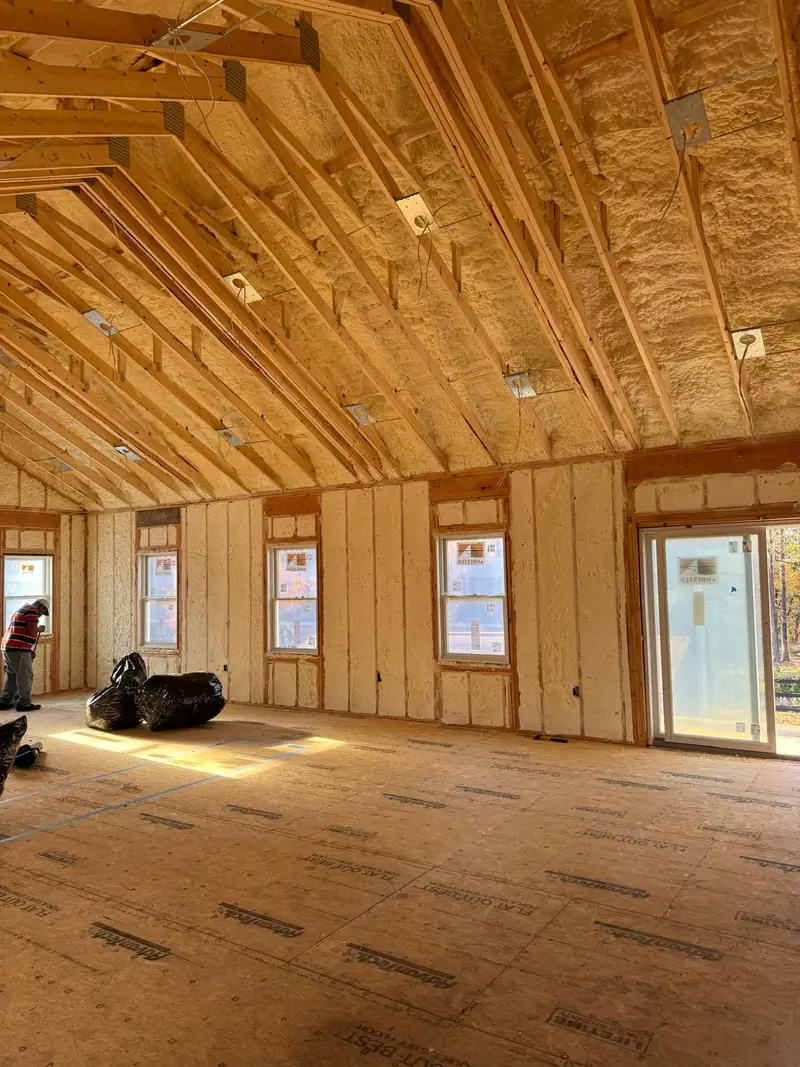
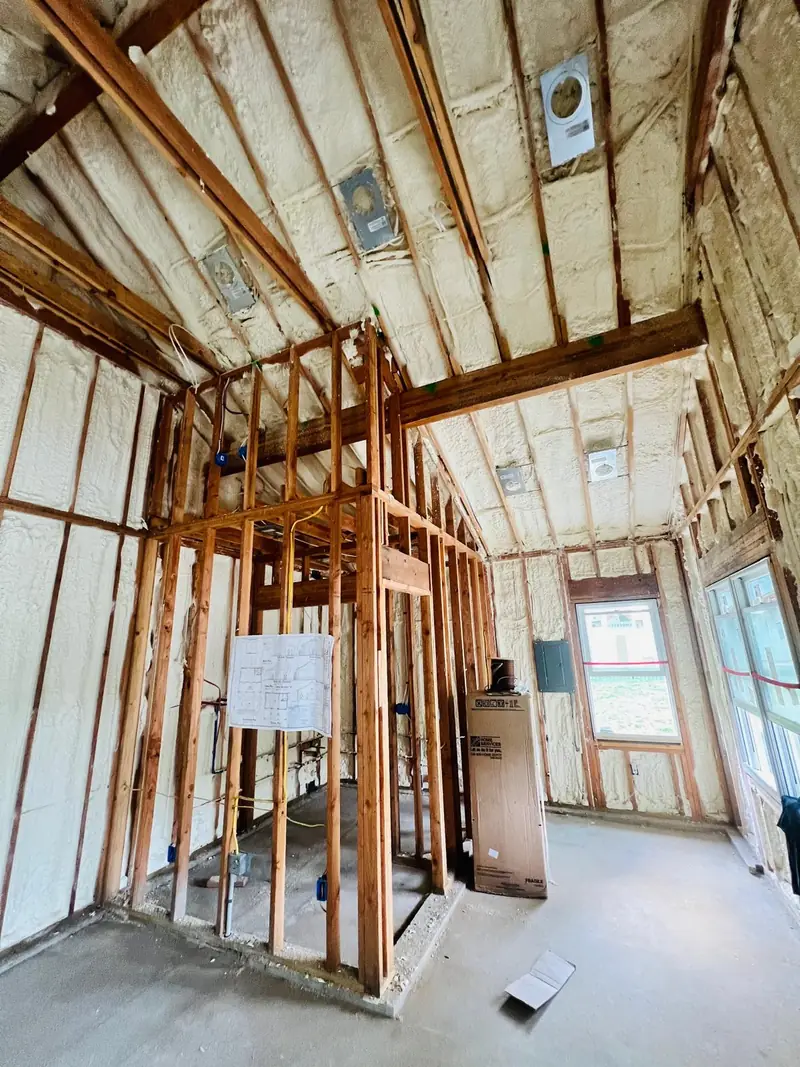
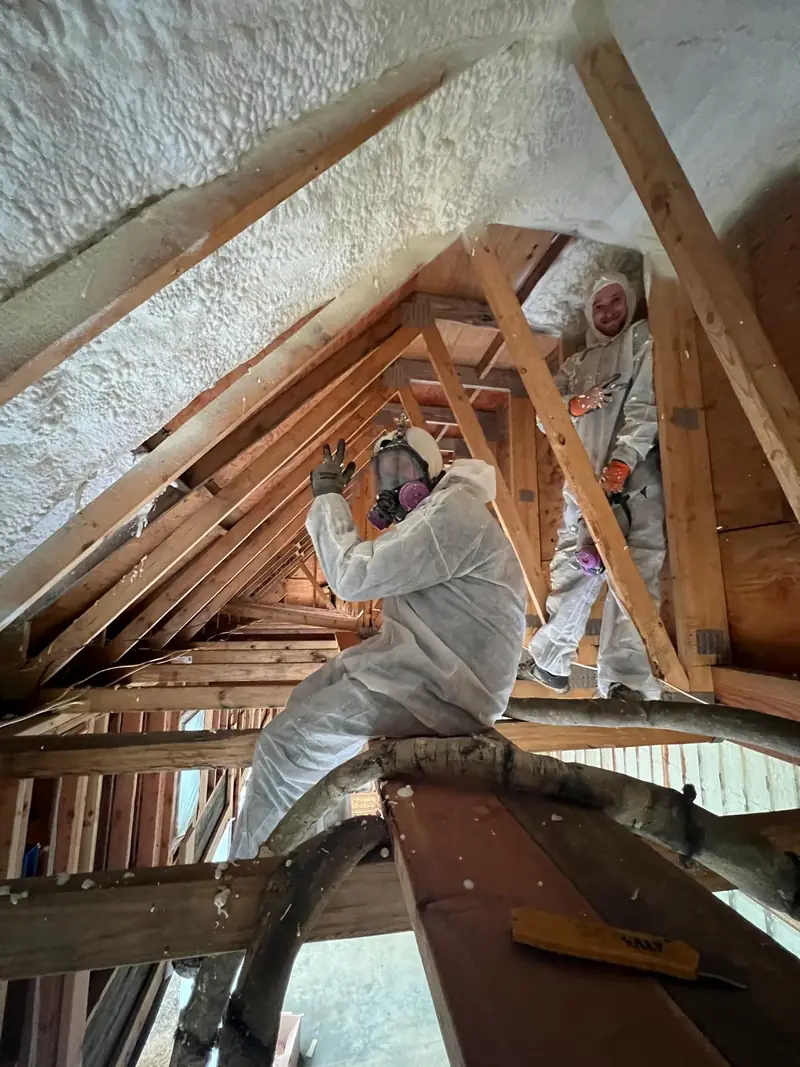
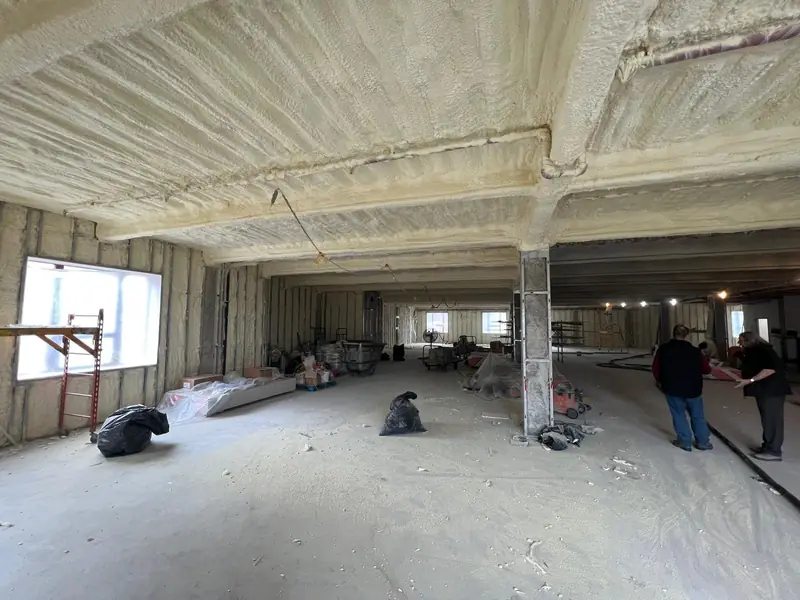
Residential framing, attic roof decks, and commercial interiors each create their own access, moisture, ventilation, safety, and protective-covering requirements.
What matters
Attics, roof decks, walls, crawl spaces, basements, additions, and renovations each need their own moisture and ventilation strategy.
Warehouses, shops, agricultural, and other buildings require coordination with use, fire protection, finishes, and code.
Material selection depends on the assembly and project, not a blanket claim that one foam is always better.
The process
Review where insulation and the air-control layer belong in the building.
Define access, masking, substrate condition, occupancy, ventilation, and sequencing.
Apply the specified product and thickness, then review the completed work and documentation.
Common questions
No. Moisture, ventilation, substrate, access, code, fire protection, and occupant considerations all matter.
The answer depends on the assembly, climate exposure, vapor control, desired R-value, structural considerations, and code requirements.
Occupancy and re-entry requirements must follow the product, site controls, and installer safety plan. Confirm the project-specific plan before work begins.
No. Industrial describes how a building is used, while metal-building insulation describes its construction. A warehouse or workshop may need wall insulation, interior roof-deck insulation or a wider enclosure assessment. Exterior roof repair is a separate scope.
Ready to discuss the project?