
Surface and preparation
Identify the existing roof and coating, necessary investigation, cleaning, repairs, preparation and any primer. Make clear which damaged materials or drainage concerns require separate work.
Roof coatings & recoating
Protect a suitable commercial roof with silicone, acrylic, or polyurea roof coatings. Score Spray Foam serves New York and New Jersey with coating assessments, surface preparation, and SPF roof recoating matched to the existing system.
Five-star Google reviews
Selected feedback from customers who worked with the Score Spray Foam team.
“They went out of their way for anything I requested, very reliable, communication is a joy. No more leaks for this rooftop!”
“Great company great professional customer service.”
“Reliable, on time, and very professional.”
The right starting point
Coating may be an option when the roof beneath it remains sound and compatible. On an SPF roof, the protective coating shields the foam from exposure and forms part of the specified roof system. Before recommending a new coating or recoat, we review the surface, existing materials, moisture concerns, drainage, and details. Wet insulation, damaged foam, poor adhesion, or an unsound deck can require other work first. A coating is not a substitute for resolving those conditions.
Planning your project
A silicone, acrylic or polyurea label does not describe the whole job. Ask what happens beneath the coating and how the proposed system fits the existing roof.
Identify the existing roof and coating, necessary investigation, cleaning, repairs, preparation and any primer. Make clear which damaged materials or drainage concerns require separate work.
Ask the proposal to identify the selected system, application requirements and treatment of edges and penetrations. Confirm compatibility from the actual system documentation rather than comparing products by color or chemistry alone.
Keep the product and application information with the roof records. Ask for the inspection and maintenance guidance and any applicable written warranty, including conditions and exclusions. This helps future repairs use compatible materials.
Existing spray foam roofs
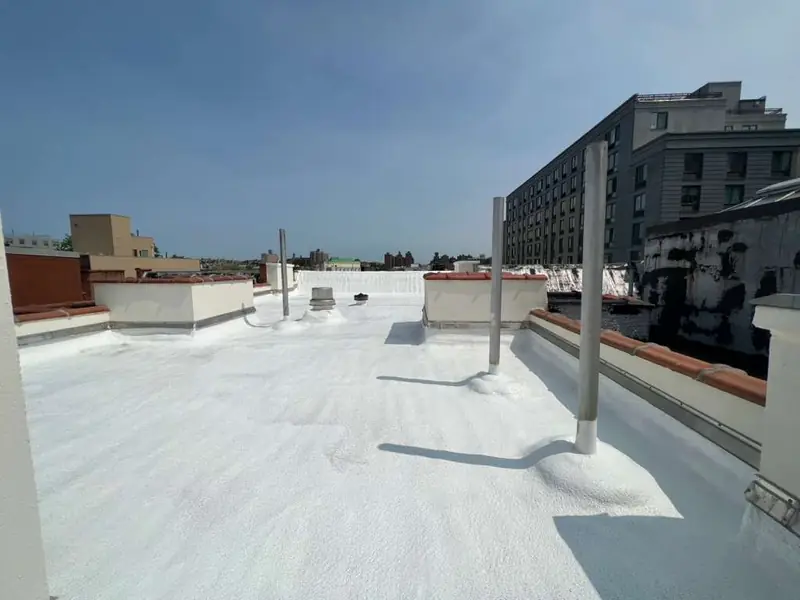
An existing SPF roof may be suitable for recoating when the foam and underlying assembly remain serviceable. The assessment looks for worn protection, exposed or damaged foam, moisture concerns, and changes at edges or penetrations. Local repairs and preparation are addressed before applying the specified protective coating. If the project instead requires a complete new foam-and-coating system, review our SPF roofing service.
Explore complete spray foam roofing systemsRoof area is only part of the price. Access, existing coating condition, cleaning, repair needs, details, primers, specified coverage, site protection, and scheduling can all change the scope. Share your address, approximate roof size, photos, coating history, and any known leaks when you contact us. We serve New York City, Long Island, Westchester, and areas of northern and central New Jersey; availability depends on the project and location.
Discuss your roof-coating projectKeep the system information and handover records so future inspections and repairs use compatible materials. Inspection needs depend on the installed system and roof use, including work around rooftop equipment. Report coating damage, exposed foam, drainage concerns, or new leaks promptly. Recoating should be based on roof condition and the applicable maintenance guidance, not a universal interval or a promise that the roof will never need further work.
Coated roof details
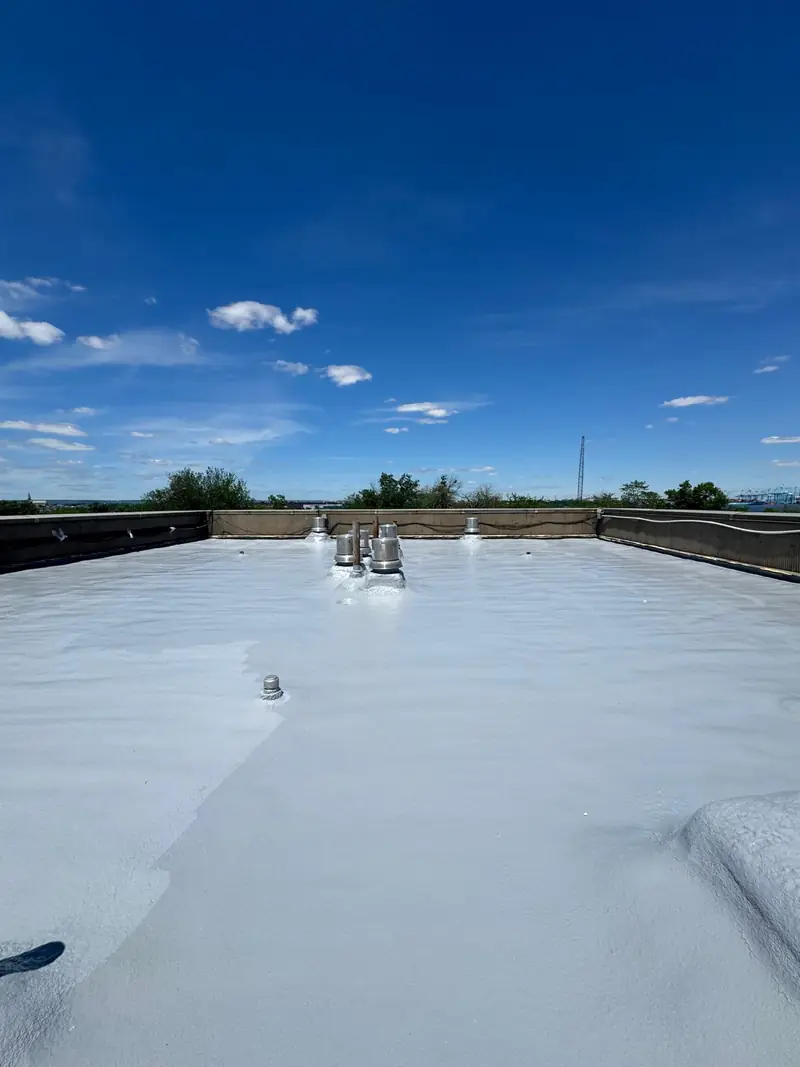
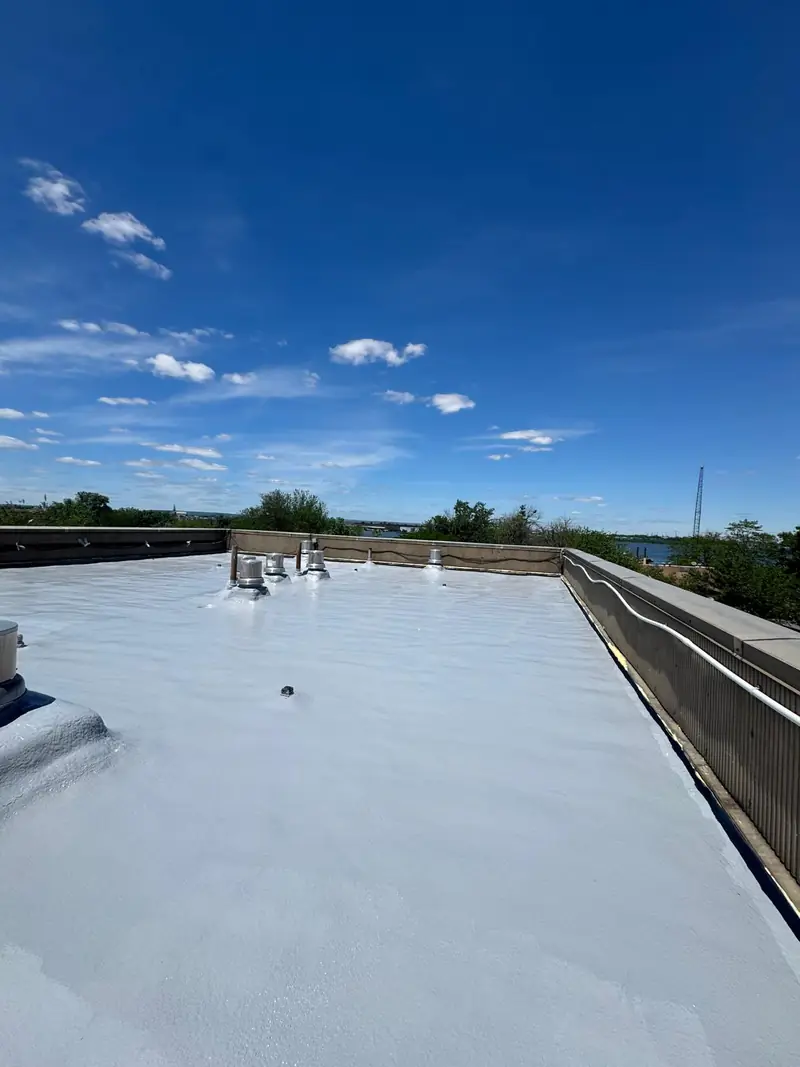
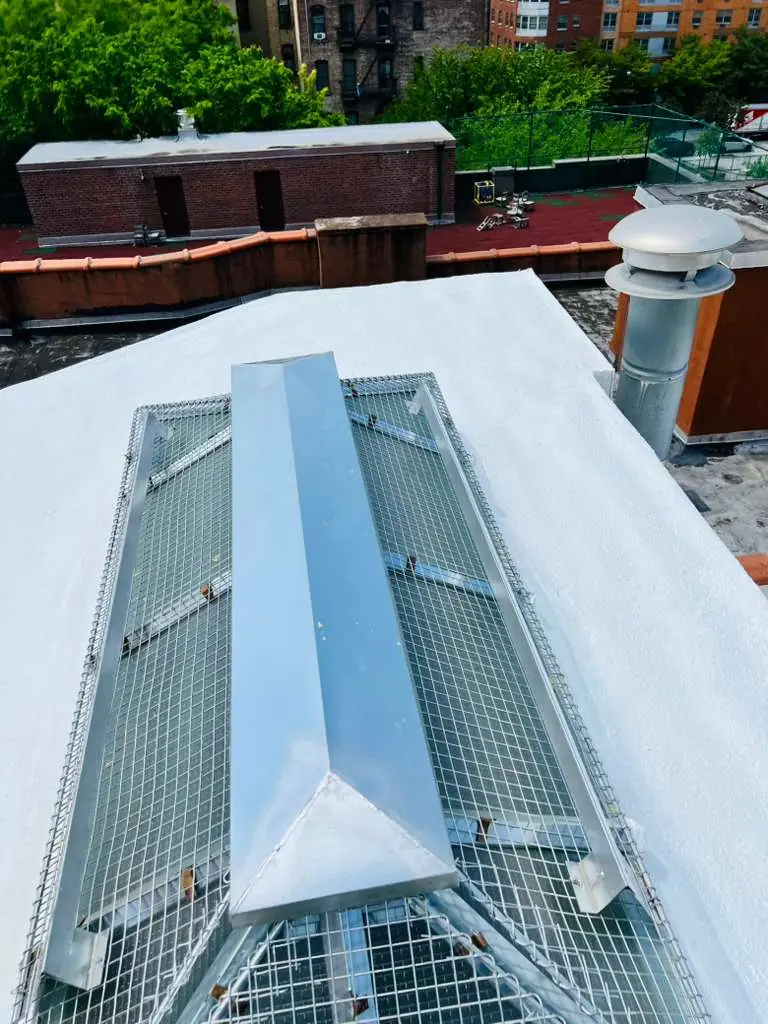
See coated SPF surfaces, finished edges, and protected roof penetrations from Score’s project work. The condition of these details matters alongside the protection across the main roof surface.
What matters
Inspect condition, moisture risk, adhesion, seams, penetrations, flashings, drainage, and prior coatings.
Define cleaning, drying, reinforcement, detail work, primer, and repairs before coating.
Document the installed system and establish inspection and maintenance expectations.
The process
Review existing materials and conditions, identify investigation or repair needs, and define suitable coating options with clear inclusions and exclusions.
Plan cleaning, drying, repairs, detail reinforcement, and primer where required. Coordinate access, adjacent property protection, and the application conditions.
Install the selected coating to its specification, review coverage and details, and provide the project information needed for future maintenance.
Common questions
Our roof-coating service includes silicone, acrylic, and polyurea options. The selected system depends on the roof, existing materials, preparation requirements, and project conditions.
Polyurea describes a material chemistry; roof coating describes an application. Some polyurea systems are designed for roofing. They are not interchangeable with silicone or acrylic systems without evaluating compatibility and the specification.
No. Leaks may involve wet materials, failed details, drains, penetrations, walls, or other conditions that require investigation and repair. Coating alone may not address the cause.
No. We assess suitability, with SPF roof protection and recoating a core application. Other substrates or existing membranes need individual confirmation; a coating material’s advertised uses do not mean every roof is suitable.
No fixed saving can be promised. Performance depends on the roof system, insulation, climate, building use, mechanical systems, and condition of the coating.
Roof size, preparation, repairs, weather, access, application method, and product curing requirements affect scheduling. Occupancy, protection, and return-to-service arrangements should be agreed for the specific project.
If you are unsure about the roof’s overall condition, or are dealing with widespread leaks or deterioration, start with a commercial flat roof assessment. That establishes whether coating is appropriate or another approach needs evaluation.
Ready to discuss the project?