
Start with an occupancy decision, not a promise of no disruption
Owners understandably want to keep tenants, staff, deliveries, and customers moving. Exterior work may offer opportunities for phased scheduling, but spray application, preparation, primers, and coatings each introduce conditions that need evaluation. A statement that work is outside is not an exposure-control plan.
The CPI and SPFA exterior-application safety guidance calls for case-by-case evaluation and manufacturer-specific safety information. This article is an owner planning checklist, not a safety clearance, exposure assessment, or substitute for current product instructions.
Map how roof work could affect the building
Air intakes, windows, and connected spaces
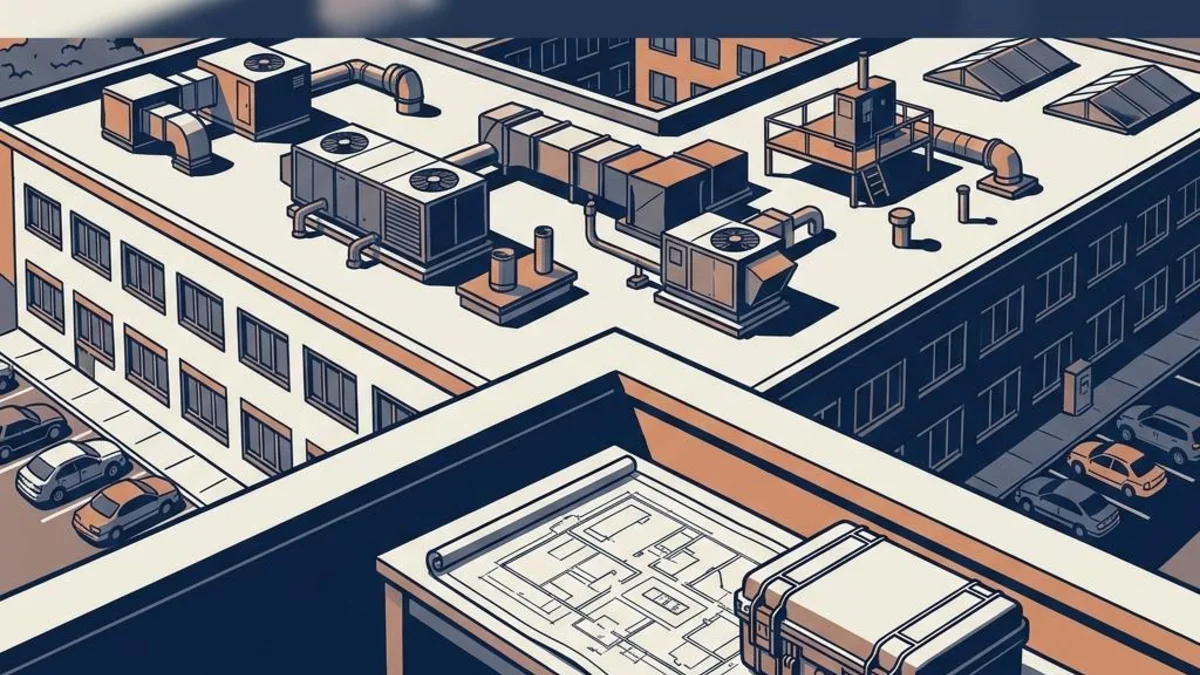
Identify rooftop and wall-mounted outside-air intakes, operable windows, roof hatches, exhaust outlets, and pathways to occupied rooms. Nearby buildings matter too. Wind and equipment operation can change where airborne material travels, so the plan needs more than a drawing of the spray area.
Any HVAC shutdown, intake protection, ventilation change, or restart procedure belongs with qualified personnel. Building staff should not improvise closures or disable equipment based on this article; ventilation, process equipment, and life-safety dependencies must be evaluated together.
Vehicles, entrances, and adjacent property
Overspray can affect parked vehicles, glazing, equipment, and neighbouring finishes. Establish who arranges vehicle relocation, access restrictions, protection, and notifications. A property line does not necessarily mark the limit of potential impact.
Other trades and roof users
Coordinate HVAC technicians, communications contractors, maintenance personnel, and deliveries. Access to the work area must be controlled. Work scheduling should prevent another trade from entering an active application zone or damaging newly installed materials.
Put responsibilities in writing before mobilization
Use this preconstruction agenda to identify missing decisions. The controls themselves must be selected by the responsible qualified parties.
| Planning item | Decision to document | People to coordinate |
|---|---|---|
| Occupancy | Which spaces or operations must close, relocate, or remain restricted? | Owner, tenants, contractor, and appropriate safety professionals |
| Building systems | What equipment changes are needed, and who authorizes and verifies restoration? | Building operator and qualified mechanical personnel |
| Site protection | What areas, vehicles, surfaces, and neighbouring properties need protection? | Contractor, owner, and affected property representatives |
| Communications | Who issues notices, handles concerns, and communicates schedule changes? | One named owner contact and one contractor contact |
| Stop and restart | Who pauses work when conditions change, and what must be checked before resuming? | Responsible project and safety personnel |
| Closeout | How are restrictions lifted, systems restored, and roof access released? | Contractor, building operator, and responsible specialists |
Separate working days from calendar duration
A schedule should distinguish investigation, preparation, removals, repairs, foam application, coating, curing, inspections, and closeout. Some stages may have different access or occupancy restrictions. A short application period does not mean the entire project has the same short duration.
Weather can interrupt work even when the building is ready. Application and curing conditions depend on the selected products, substrate condition, temperature, moisture, wind, and forecast. Ask how work areas will be left protected during interruptions and when revised notices will be issued.
For New York and New Jersey projects, discuss site-specific access and neighbouring-property constraints early. Do not assume every urban roof has the same restrictions or that every suburban property has adequate staging space.
Could evening or weekend work avoid a closure?
It may help coordinate operations, but it does not remove application limits or exposure concerns. Weather, surface conditions, lighting, noise restrictions, staffing, equipment availability, curing, and permitted hours can make a proposed shift unsuitable. The reopening plan still needs an authorized decision rather than an assumed Monday-morning deadline.
Buildings with sensitive occupants, continuous processes, or systems that cannot be interrupted may need specialist review or a different project sequence. If the necessary controls cannot be achieved, the project team should reconsider the approach.
Discuss operations before choosing a roofing system
Review the layers and work involved in spray foam roofing systems, then share your operational constraints during a commercial flat roofing assessment. Roof suitability and an achievable site-protection plan both matter.
Before accepting a bid, include these obligations in the commercial roof proposal comparison. Avoid a scope that promises continuous operation but leaves HVAC, notices, protection, and shutdown responsibilities undefined.