
Project case study / SPF roofing
Restoring the roofs of four residential towers with spray foam.
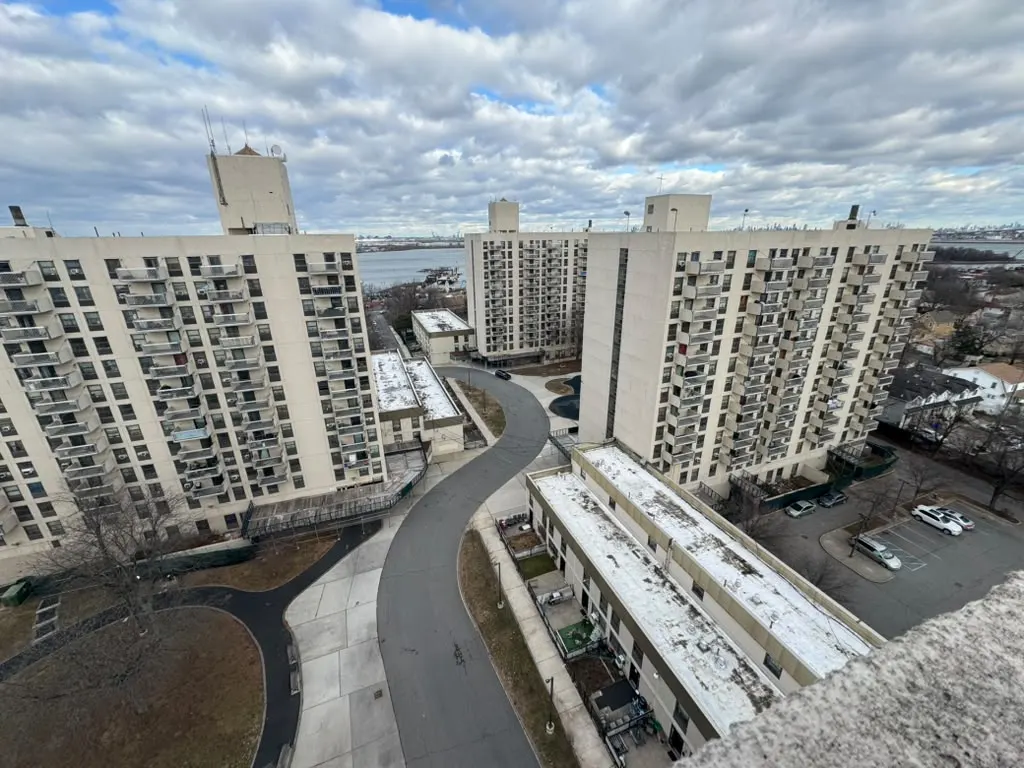
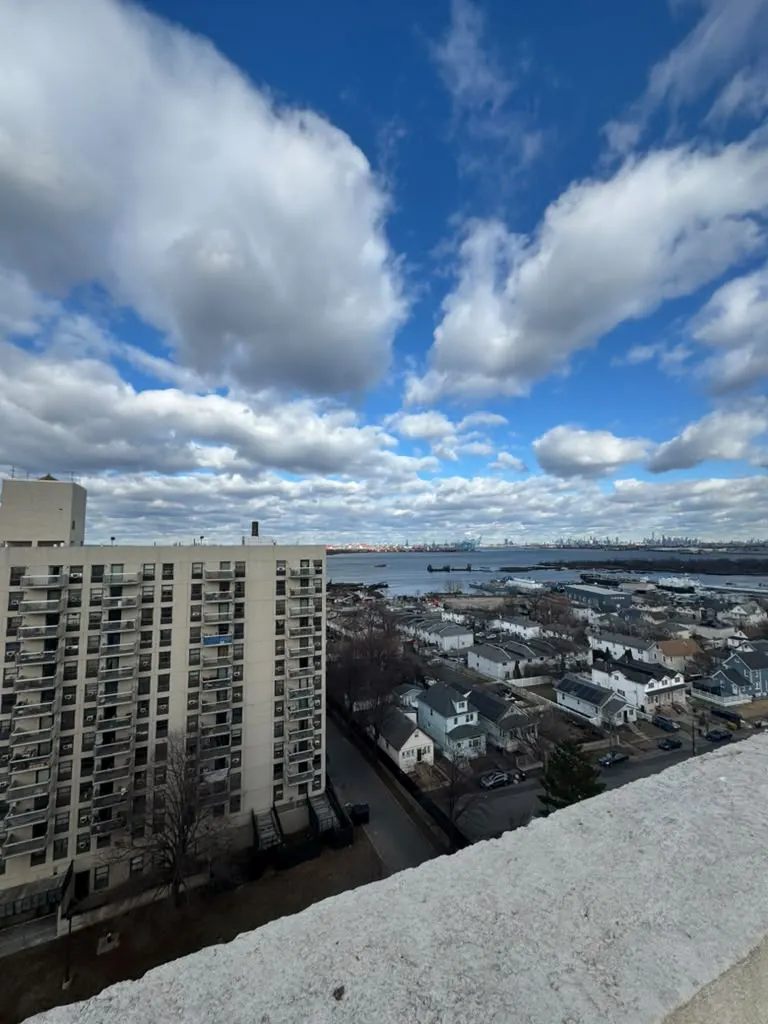
On four large housing towers in Staten Island, Score installed a foam roofing system over the existing membranes instead of tearing them off, adding insulation and a new protective white silicone surface across more than 80,000 square feet.
Project details and photos supplied by Score Spray Foam.
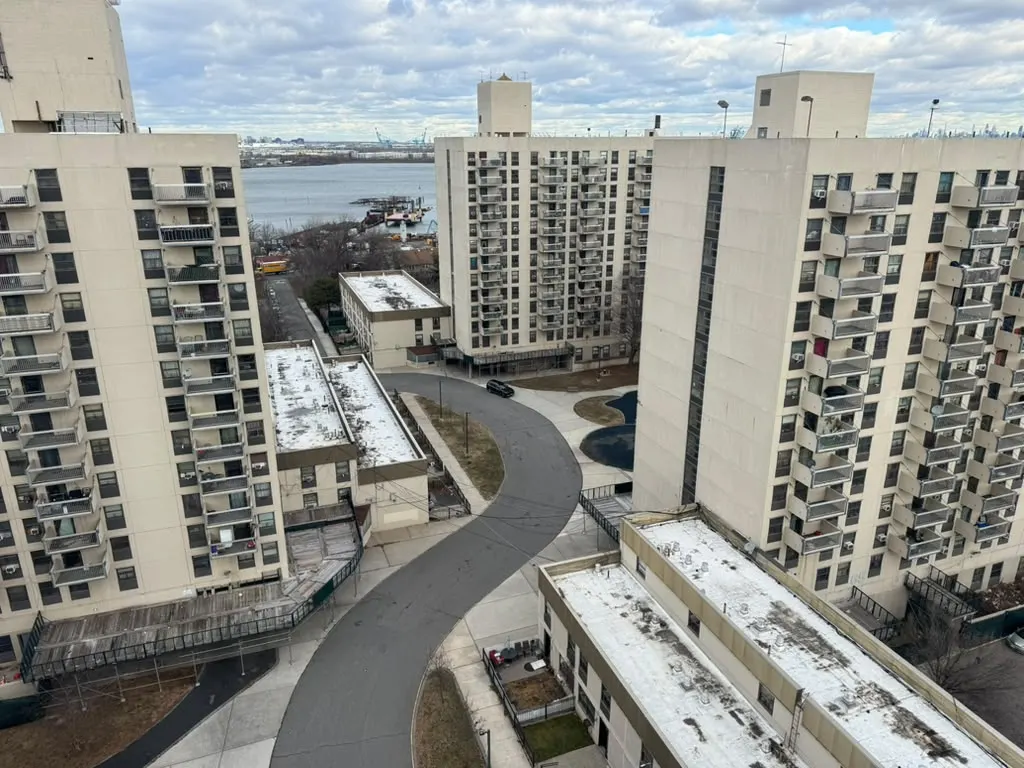
- Buildings
- Four residential towersStaten Island, New York
- Roof area
- 80,000+ sq ftTotal across all four towers
- Foam
- 2+ in. Carlisle SPFEstimated added R-14 or greater
- Finish
- 3 coats Carlisle siliconeWhite, with roofing granules
The problem
Membranes that needed insulation and protection, not removal.
The existing roof membranes on all four towers needed better insulation and a protective roofing layer. A full tear-off on buildings of this size means removing and disposing of the old roof across every tower before anything new goes on.
The chosen approach was a spray foam roofing system installed over the prepared existing roof. The membrane stayed in place, and the foam added both insulation and a continuous, seamless surface that could be built up around the many vents, fans, and parapets on these roofs.
Whether foam can go over an existing roof depends on its condition, moisture, and attachment. Our guide on spray foam roofing over an existing roof explains what has to be checked first.
How the work went
Prepare, foam, coat.
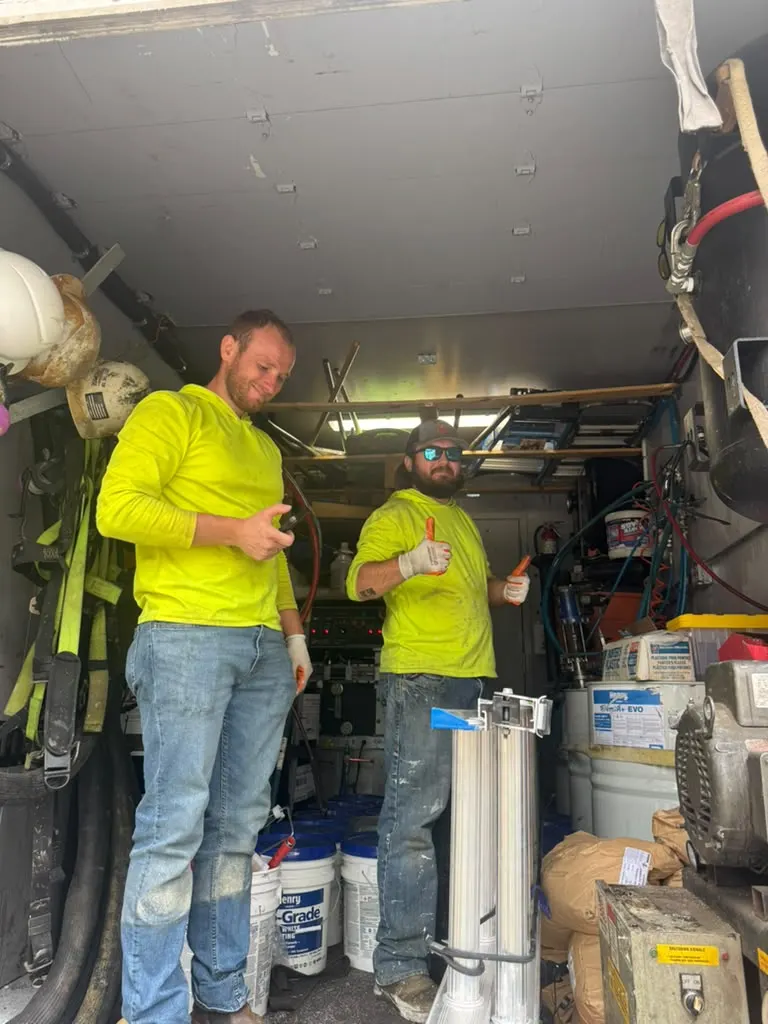
Crew and spray equipment inside the rig. 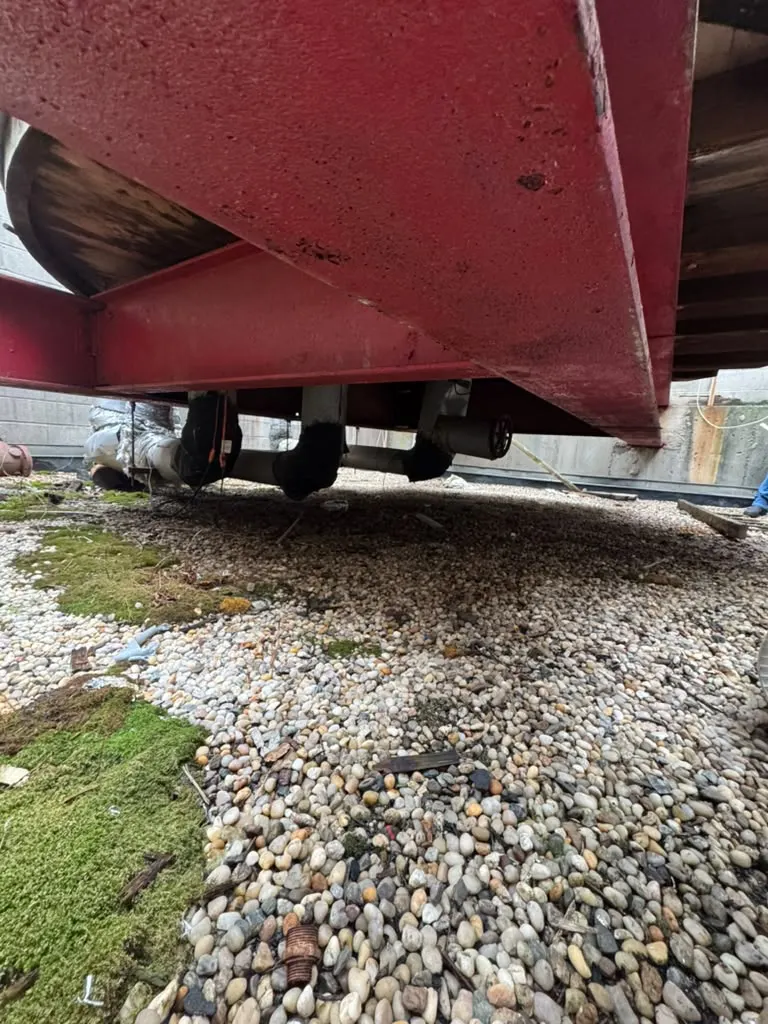
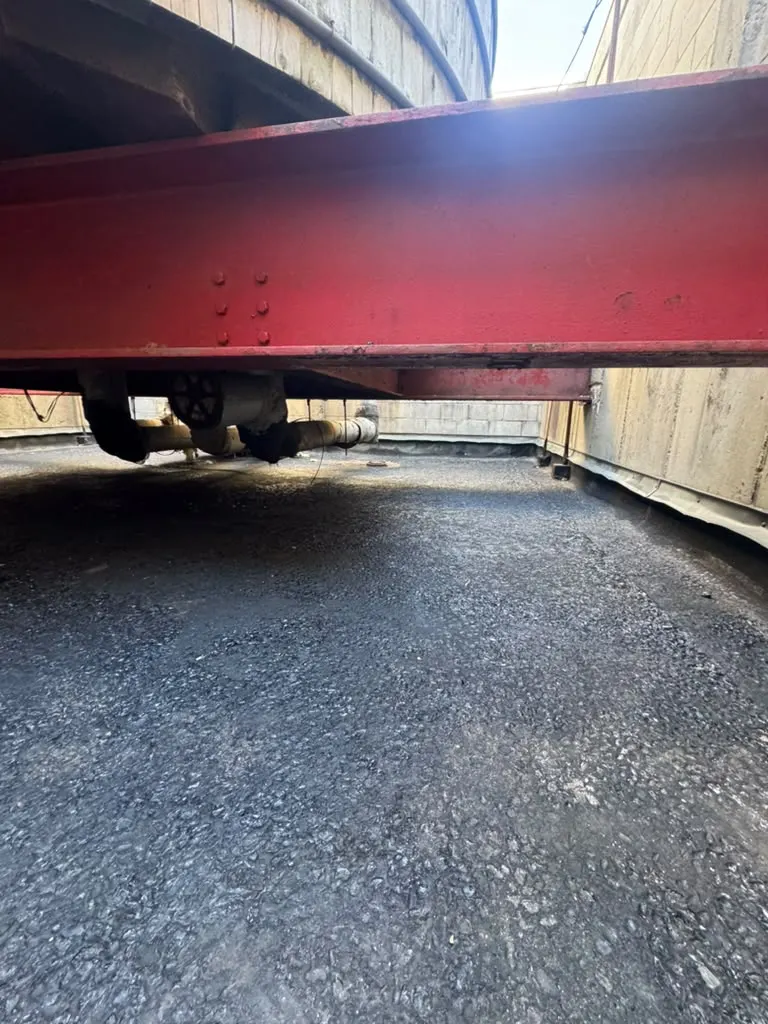
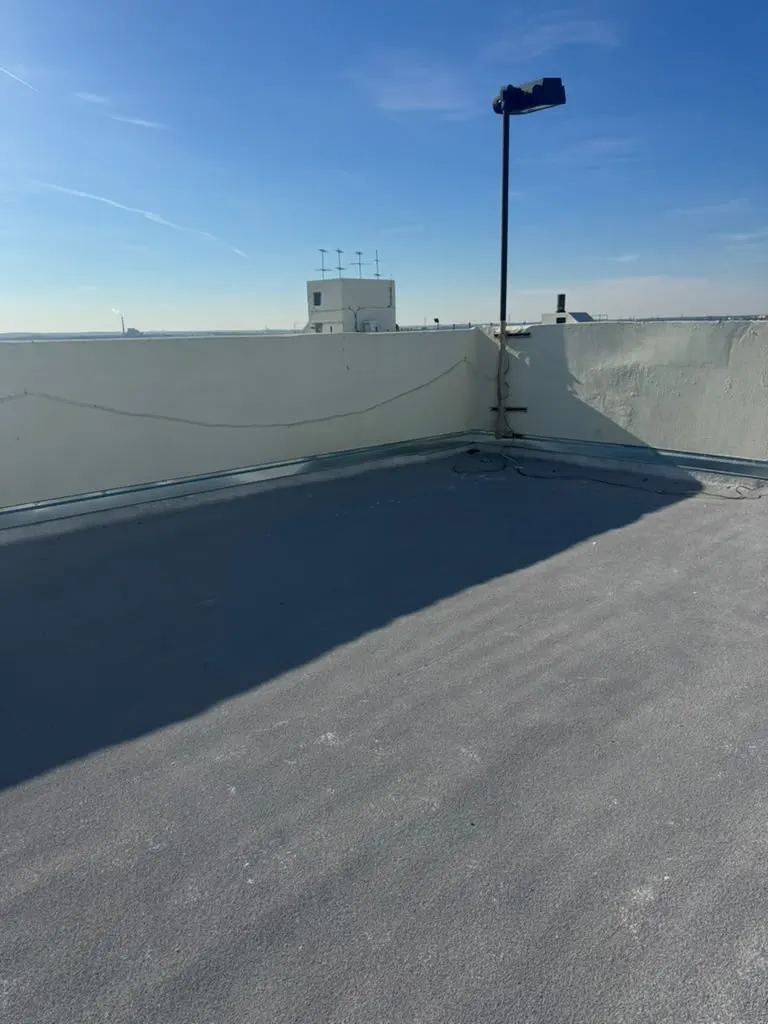
Existing gravel surface beneath equipment supports. Stage 01Prepare the existing roof and keep the membrane
Project scopeThe existing membranes needed better insulation and a protective roofing surface. Rather than a full tear-off, the restoration kept the underlying membrane in place and prepared the existing roof to receive the new system.
The project photos show the crew’s spray equipment and an existing gravel-covered area beneath rooftop equipment supports.
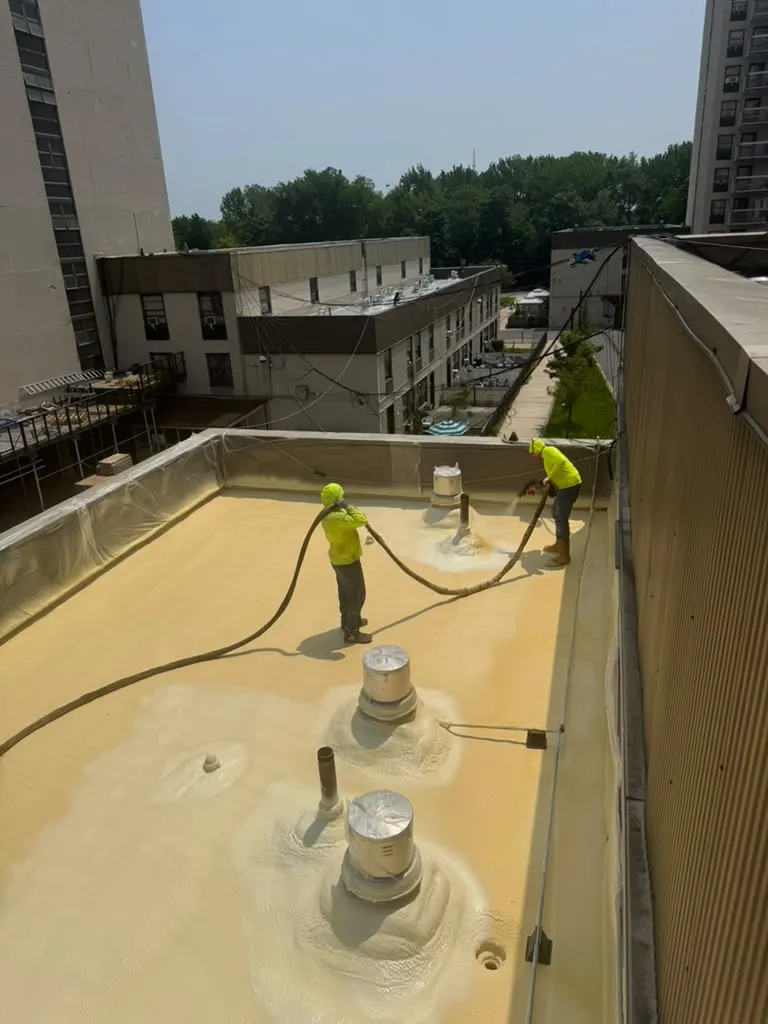
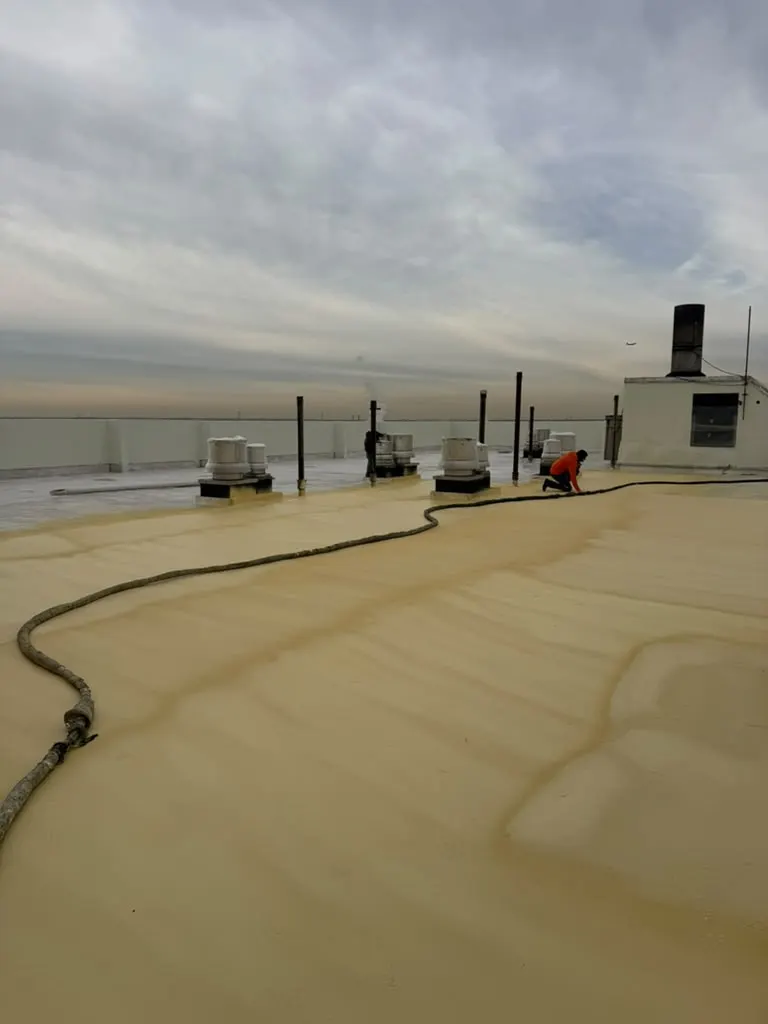
Spray foam application in progress across the roof field. 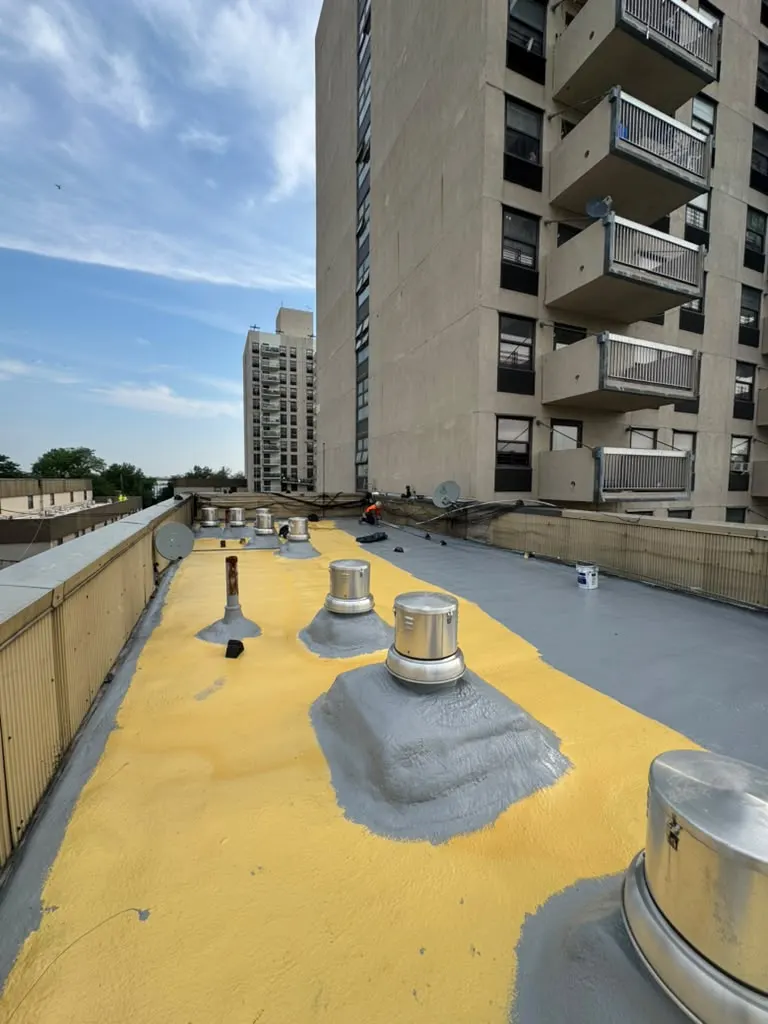
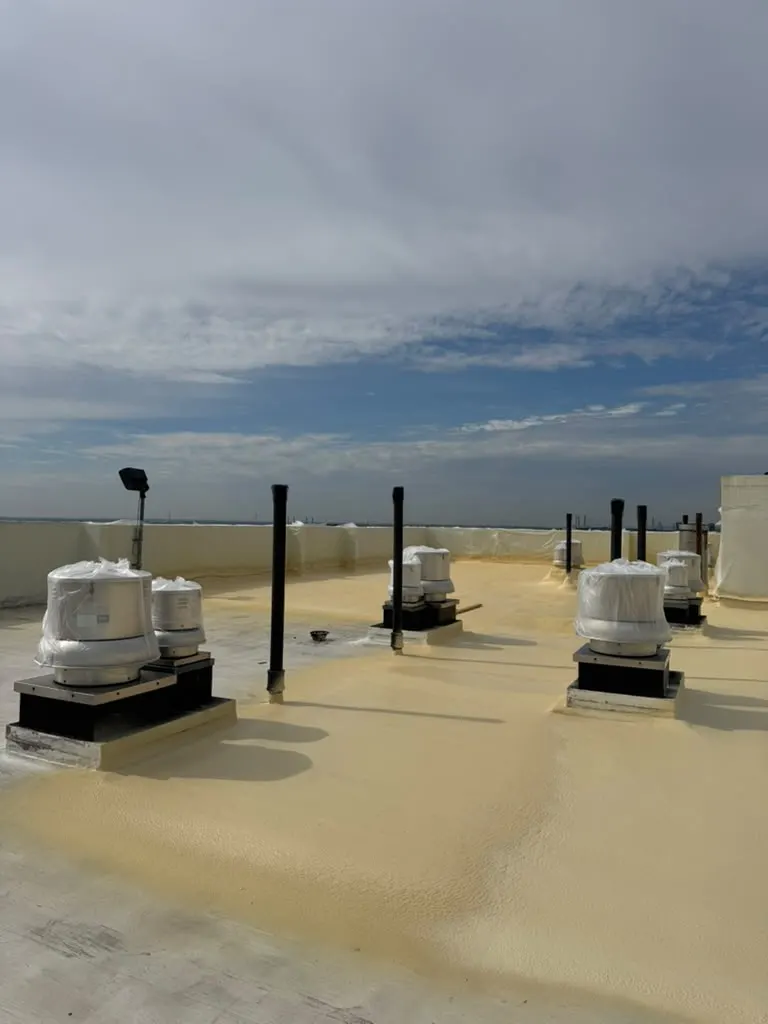
Foam built up along the parapet and around penetrations. Stage 02Spray foam across the roof field and details
Reported scopeMore than 2 inches of Carlisle spray polyurethane foam was applied over the prepared roof, carried up parapets and around vents, fans, and curbs.
At that thickness, Score estimates the foam adds roughly R-14 or more. That is an estimate for the added foam layer, not a measured value for the whole roof assembly.
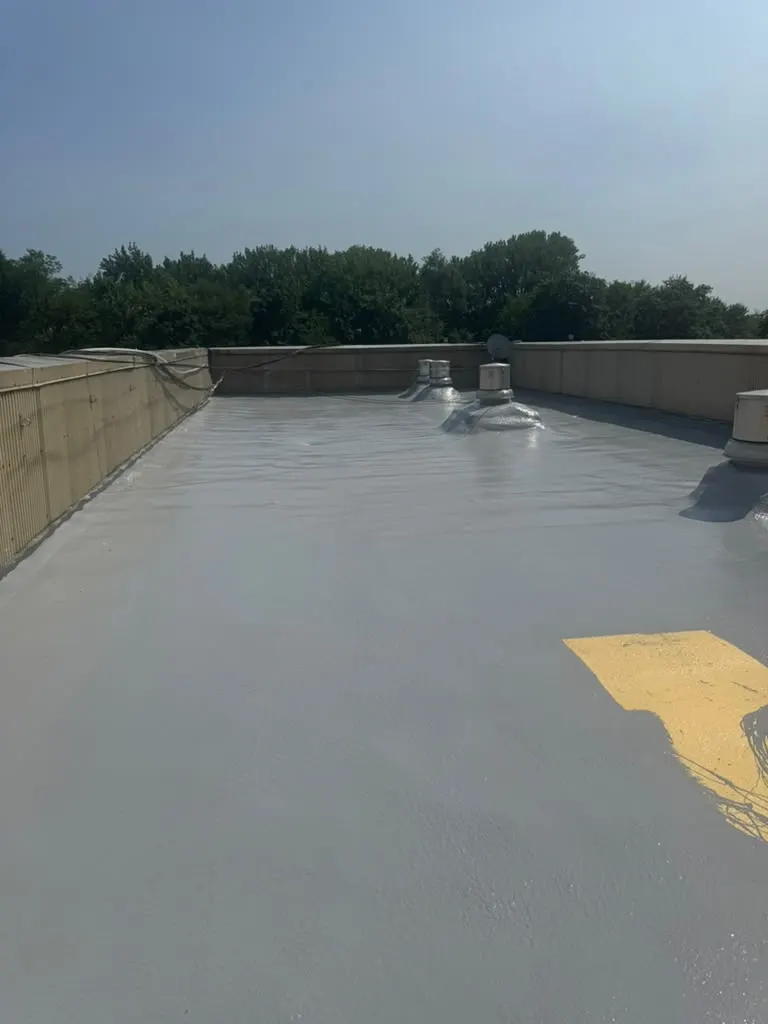
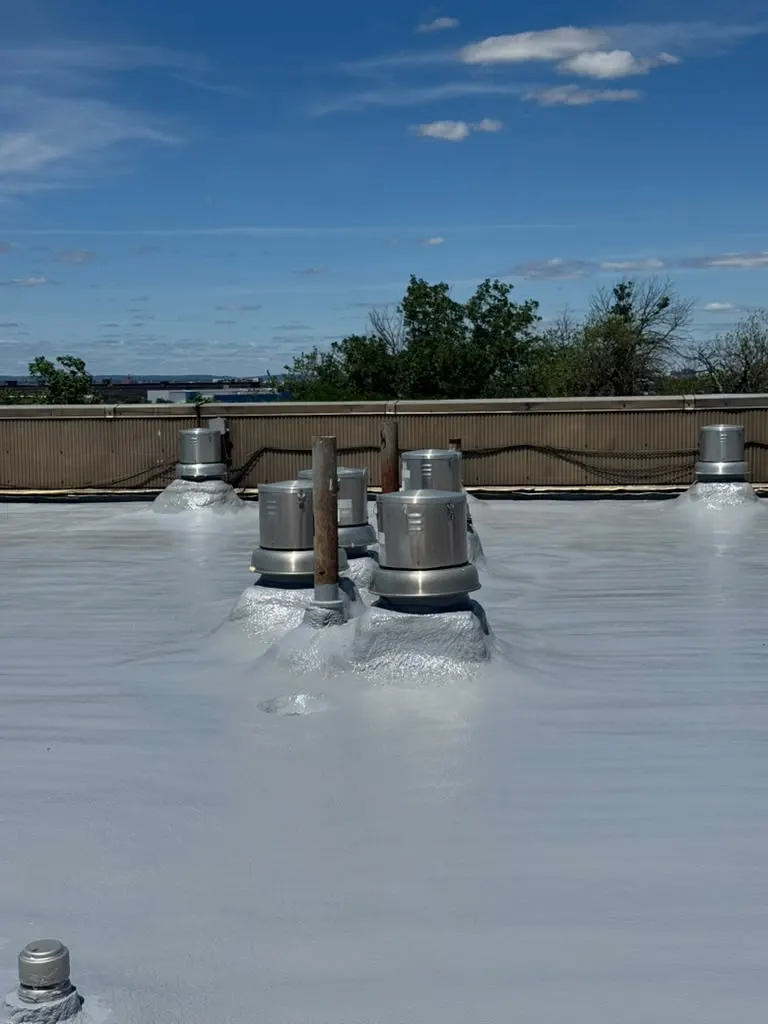
Coating progress: silicone over the foam, with uncoated foam still visible. 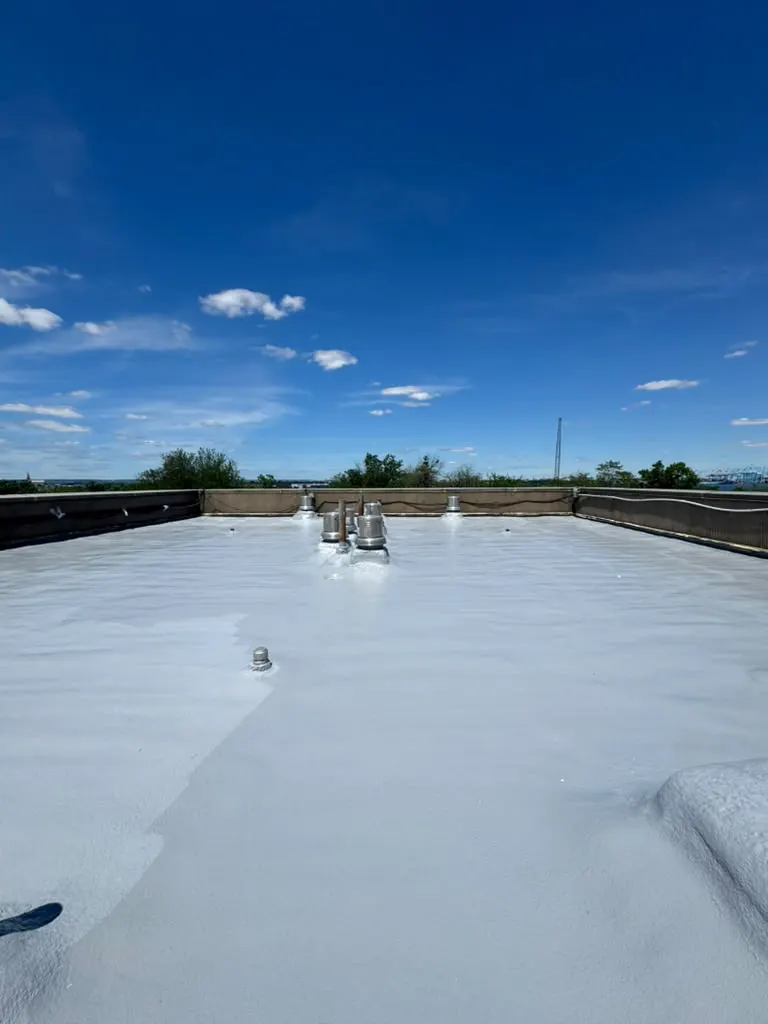
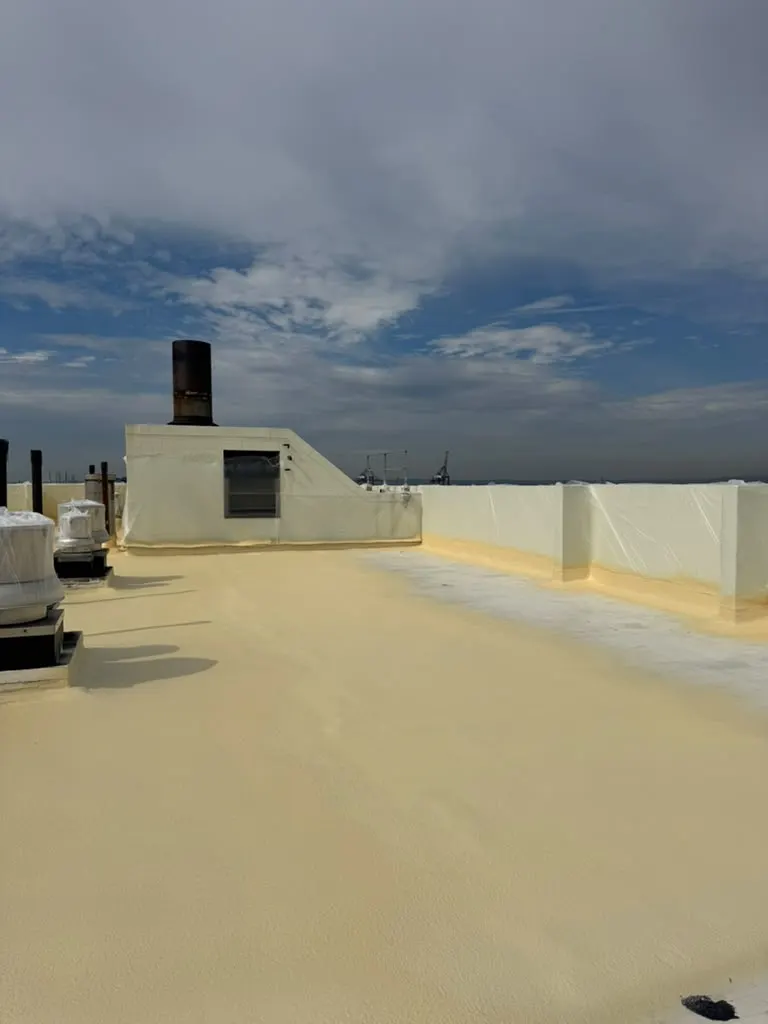
Completed white silicone finish on a roof section. Stage 03Three coats of silicone, with roofing granules
Project scopeThe foam was protected with three coats of Carlisle 100% silicone roof coating in a highly reflective white finish, incorporating roofing granules for extra surface protection.
Foam roofing depends on its coating: SPF needs protection from UV exposure and wear, and the coating is the layer that gets maintained over time.
Under the equipment
A closer look beneath rooftop equipment.
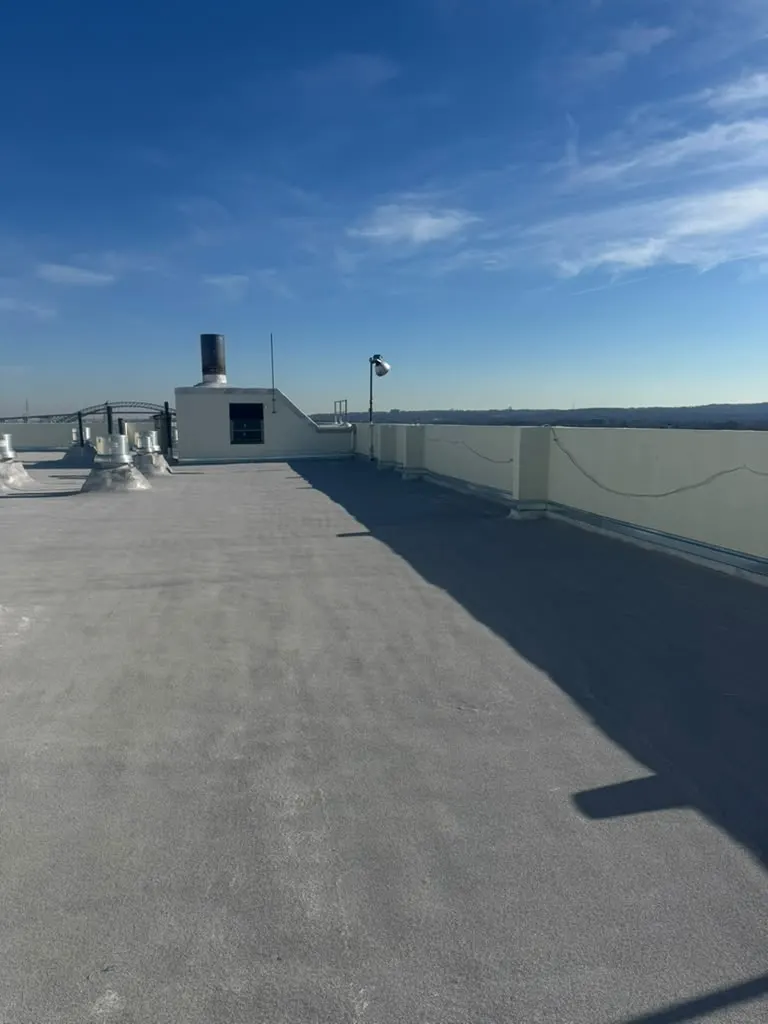
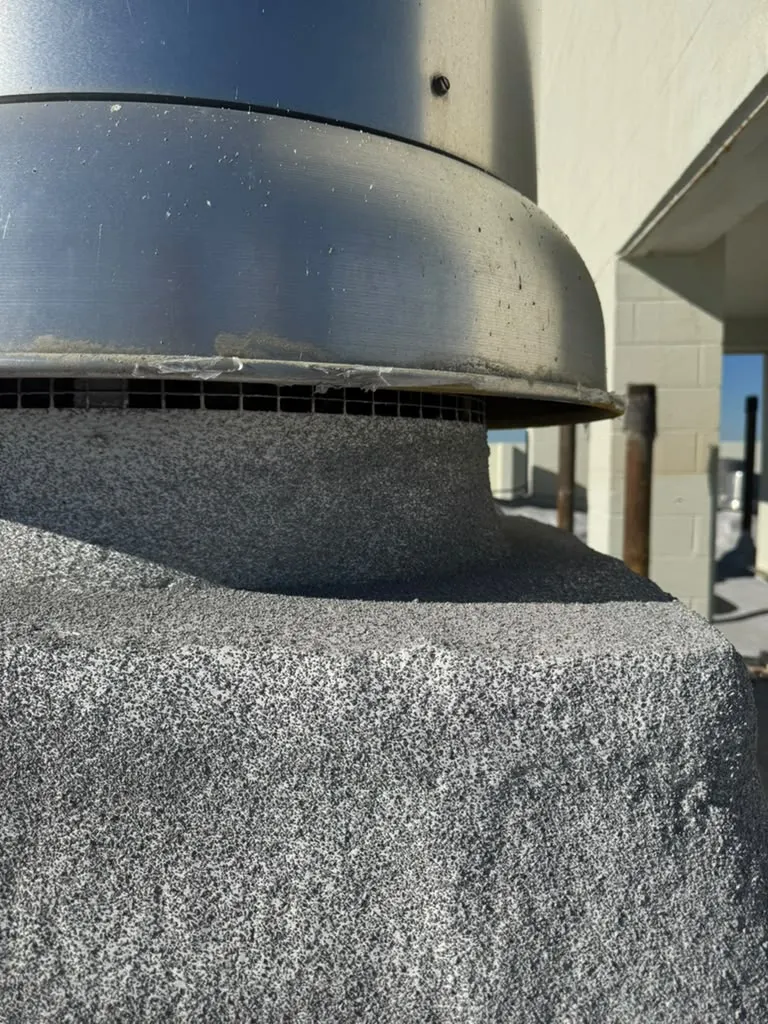
These project photos show an existing gravel surface and a restored surface beneath rooftop equipment supports. They document the roof conditions and detailing, rather than a matched-view before-and-after comparison.
What this project shows
What was installed, and what it may mean for other roofs.
Reported on this project
- Four large residential housing towers in Staten Island, NY.
- More than 80,000 square feet of roof in total across the four towers.
- Existing roof prepared and underlying membrane kept in place, with no full tear-off.
- More than 2 inches of Carlisle spray polyurethane foam.
- Three coats of Carlisle 100% silicone coating, white, with roofing granules.
- A 20-year manufacturer-backed Carlisle warranty for this completed project, subject to the manufacturer's warranty terms.
Performance context and limitations
- The estimated R-14 or greater applies to the added foam layer only. It is not a measured whole-assembly R-value and does not by itself indicate energy-code compliance.
- A reflective white finish can reduce how much solar heat the roof absorbs and may lower cooling demand. Measured energy or cost savings have not been provided for this case study.
- Keeping a sound existing membrane can avoid tear-off, but only when the roof is dry and suitable. Wet or failed roofs may need removal.
- Warranty terms differ by system, roof, and manufacturer. This project's warranty does not apply to any other roof.
Learn more about the spray foam roofing system and about SPF roof coatings and recoating.
More project photos (9)
Related
Thinking about a similar roof?
Large flat or low-slope roof?